Manifesto · 2026

Buildingsdeserve

continuousanswers.*

Today, building maintenance is mostly periodic inspections plus reactive fixes. We think it can be a continuously-answered question — what is degrading, where is the risk highest, when should we act, and what can be safely deferred — without ripping anything out of the building.

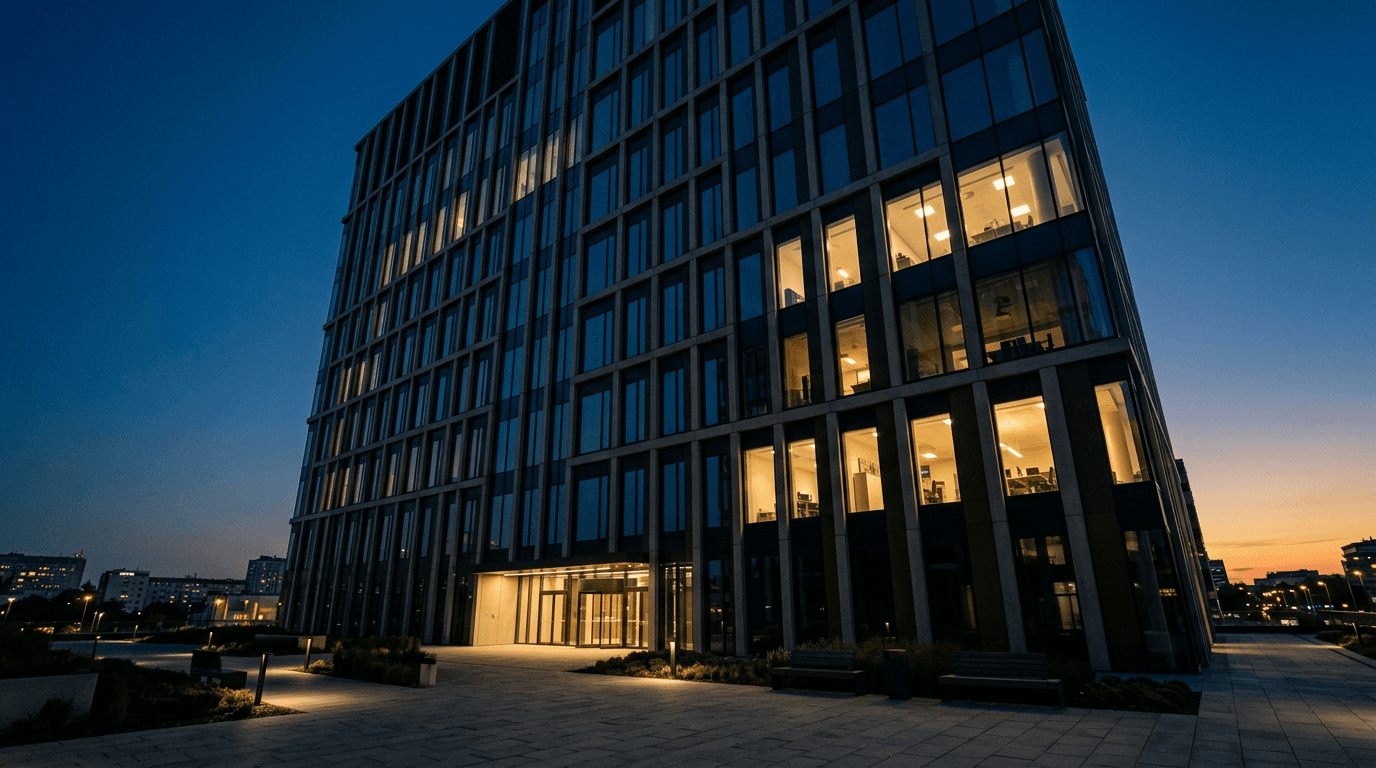
A modern commercial smart office building at dusk, with a few windows lit warmly and an amber horizon glow.

Belief 01

Buildings are not uniform.

The same building is not stressed the same way everywhere. One side gets rain. Another gets direct sun. Another stays shaded and damp. Floor 12 near a hot-water riser ages differently from a top-floor corner.

Yet "building maintenance" is still mostly answered at the building level — periodic inspections, generic schedules, reactive tickets. We think the unit of analysis should be the zone and the component, not the building.

Belief 02

The data already exists.

Most commercial buildings already have a BMS, sensors and meters. They generate trend logs, alarms and meter data — but a lot of it is under-used for prevention.

Storage and connectivity are now cheap. Project specs and build records are usually on file (PDFs, drawings, spreadsheets). Maintenance history is in the CMMS. The hard part isn't getting more data; it's combining what's already there with materials and exposure to produce a useful, defensible answer.

Belief 03

Start with rules and physics. Then add ML.

We start with a deterministic engine: exposure stress, material susceptibility, aging curves and a dependency graph. That gives day-one outputs that are explainable and auditable — every risk output ships with an evidence trail.

ML is in the roadmap, not the foundation. It will calibrate degradation rates per building, reduce false alarms, and learn which signals actually predict real defects. But the first version runs from "today forward" and gets better as the building generates outcomes.

Belief 04

Trust is earned per output.

The maintenance team is the customer of every risk brief we ship. If we tell them to inspect a zone and the inspection comes back clean, that has a cost — their time, their credibility internally.

So we ship every risk output with the evidence trail: what data drove it, what threshold was crossed, the recommended inspection checklist, and what to defer. Negative inspections are a signal for the engine, not a contradiction.

Belief 05

Wedge: sensor-rich commercial buildings.

We're not chasing every building. We're starting where the telemetry, the BMS and the build records already exist — sensor-rich commercial real estate. That's where the deployment is days, not months, and where the per-incident ROI is highest.

We aren't comfort dashboards. We aren't FDD on HVAC. We are explicitly a maintenance-risk layer that uses materials, exposure and history. We extend the FDD playbook from operations to materials.

If your portfolio fits — sensor-rich, commercial, with build records on file — we want to hear what you'd want from this.